
20 Essential BJJ Techniques
You really should be taught these moves in class

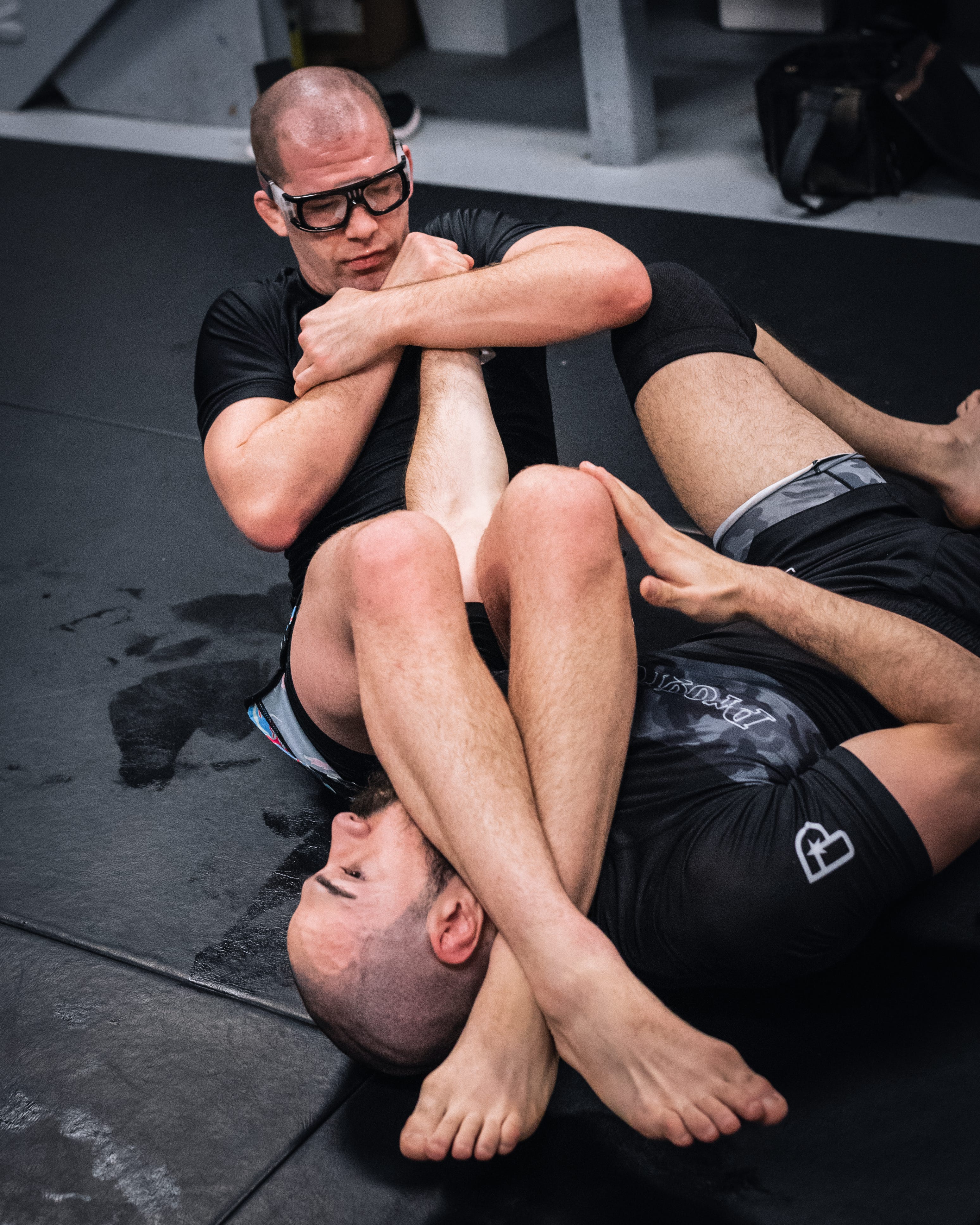
BJJ is a pretty laid back martial art. Judo would be the closest martial art to BJJ. BJJ is a lot less formal compared judo. There’s no set curriculum to learn BJJ like there is in judo. When students go to a BJJ class they could be learning from several different areas like armbar from mount, half guard bottom, a takedown with both athletes standing. The amount of techniques and positions are endless.
I think to take BJJ to the next level we as BJJ coaches and athletes need to figure out what makes up the core essential BJJ techniques. I asked myself, what’s a BJJ technique you absolutely must know?
I’ve done my best to come up with a list of 20 BJJ techniques I think are absolutely essential. You should be taught these and regularly practice them in BJJ class.
The 20 essential techniques of BJJ
Rear-naked choke
Guillotine choke
Straight armbar
Kimura lock
Arm triangle choke
Triangle choke
Darce choke
Front headlock
Arm drag
Double or single leg takedown
Pull guard
Technical standup
Mount escape (trap and roll)
Shrimp/hip escape
Headlock escape
Hook sweep
Double ankle sweep
Tripod sweep
Guard retention
Americana armlock
Leg lock (bonus)
1.) Rear-naked choke
My favorite technique in BJJ. The RNC is statistically the number one successful submission in all of mixed marital arts (UFC) and BJJ competition. It’s often the first technique I show to beginners, as it’s a move that doesn’t require any athleticism. I get my regular students to drill, review, and practice it on a regular basis.
2.) Guillotine choke
High percentage submission. The guillotine is great because it’s done in front of your opponent. All that you need for a chance at a guillotine choke is your opponents head below your armpit. It’s versatile as you can attack a guillotine standing as well as on the ground from both top or bottom position. This is a great technique to use against wrestlers. The first guillotine master I remember watching was Marcelo Garcia.
3.) Straight armbar
A bread and butter BJJ technique. Every gym I’ve ever taken a class at has at some point drilled armbars. The armbar is a joint lock. As a general rule, I prefer chokes over joint locks but some people are just hard to choke. There’s so many small details that go into making an armbar work. Try to look at the armbar as a position rather than just a submission attack.
4.) Kimura lock
Twisting shoulder lock. There’s an argument that the kimura is a dangerous submission and causes injuries. I think all submissions can be dangerous if not preformed in a slow and controlled fashion. Garry Tonon’s ‘rolling kimura guard pass’ really opened my eyes to a new world of possibilities for the kimura.
5.) Arm triangle choke
Also known as the head and arm choke, or side choke. I get my students to practice this one a lot. Different from the normal triangle choke which is done using your legs. The arm triangle choke cuts the blood supply to the brain using your body and opponents shoulder. There’s so many different transitions from guard passes and sweeps where you can get an arm triangle. I used to think arm triangle was only a move for big, strong guys. A strategy I teach my students is to get top position, get to mount and then look to hit the arm triangle choke submission.
6.) Triangle choke
The coolest move in BJJ? It has my vote. Choke them out with your legs! I don’t teach triangles a lot in my BJJ classes because they can seem quite complicated for new students and people find them overwhelming. Triangle escapes are good to prioritize before mastering the triangle choke itself. A classic triangle choke story involves Rickson Gracie and Olympic gold medalist in wrestling, Mark Schultz. The story is the two grappled for over 20 minutes before Rickson finally submitted Schultz with a triangle choke.
7.) Darce choke
A variation of an arm triangle, the darce is like a mix between arm triangle and guillotine choke. Darce choke is a new submission relative to all the others. The story is Joe Darce, a student of Renzo Gracie, invented this choke in the early 2000’s. The darce is a very popular technique in no gi grappling and MMA. Darce choke masters are Kade Ruotolo and his brother Tye Ruotolo. Every time I wake up with a sore neck, I curse the darce choke.
8.) Front headlock
A position focused on a lot in amateur wrestling. Grabbing the back of your partners neck and pulling them down into a front headlock works just as good as a takedown. I didn’t realize front headlock was an important position until years into my BJJ training. You can go from bottom position to front headlock in the blink of an eye. I watch a lot of Gordon Ryan and he’s a master of front headlocks and controlling his opponent from there. It’s common to see guillotines, back takes, darce chokes and anaconda chokes from front headlock position.
9.) Arm drag
Another one of my techniques that I love teaching people in their first class. It’s simple, effective, and gets right to the point. Arm drags are a classic warmup movement in my classes. Sometimes we do it from standing position or butterfly guard - it varies. A standing arm drag into a rear-naked choke is standard operating procedure if you work security downtown at a bar. In all seriousness, this is a classic wrestling technique that everyone should master. I remember watching Marcelo Garcia arm drag people in ADCC 2003 thinking “I want to be able to do that!”
10.) Takedown (double or single leg)
If you can’t take it to the ground, your BJJ is useless. I remember an old teammate telling me that. Takedowns can actually feel very foreign to BJJ students, as they do most of their training on the ground. I say keep it simple. Focus on 1-2 different takedowns and really master those before branching out. I prefer teaching single legs over double legs but if someone is powerful, short, and stocky a good double leg is a great option.
11.) Pull guard
Pulling guard is not something you would want to do in a street fight. However, knowing how to pull guard is an essential skill when it comes to BJJ competition. You want the match to be in your strongest area, as quickly as possible. For some students, they feel comfortable on their backs so they pull guard and decide to fight from there. Be careful because a poorly timed/executed guard pull can result in a positional advantage for your opponent. Don’t shoot yourself in the foot.
12.) Technical standup
The proper way to get up in a fight. This is a classic BJJ warmup movement that’s done in almost every group class. The technical standup is the most efficient way to stand up from flat on your back. This would be included in a self defence 101 course.
13.) Mount escape
Most of these techniques thus far have been attacks. For good reason, because an untrained opponent isn’t likely to know how to defend any well applied BJJ techniques. However, there’s always a possibility someone could end up on top of you and you would need to know how to get out. I think this is especially important for smaller grapplers to learn.
14.) Shrimp/hip escape
Another classic warmup movement. You use this movement in many escapes to create space. The better you are at shrimping, the better your guard will become. Learning to move your body while on the ground takes a lot of time to master.
15.) Headlock escape
Know how to defeat every schoolyard bully with one technique. This is one I like showing to people who want to learn self defense. You escape their headlock and end up with them tapping to an armbar. It’s a real “Wow, this stuff works” moment. Someone who knows BJJ is not likely to put you in a headlock. But even an untrained strong person can make life difficult by putting you in a headlock.
16.) Hook sweep
A sweep is anytime you go from bottom position to top position. Get on top, stay on top. You can send someone flying through the air with a hook sweep. A Gordon Ryan/Marcelo Garcia specialty move. The hook sweep is an essential technique, especially in no gi grappling when your gripping options are very limited. The shoulder crunch hook sweep is a beautiful variation of this move.
17.) Double ankle sweep
When your opponent stands over you, grab both ankles and pull. This is a favorite technique of mine when someone stands up in my closed guard. Even for an experienced black belt like myself, it’s tough to defend against a double ankle sweep when it’s performed well. The double ankle sweep is popular in MMA, gi grappling, and no gi. Make sure your partner knows how to break fall before you practice. Sending them back can cause quite an impact.
18.) Tripod sweep
A great technique when you’re flat on your back. Simple and effective, you only need a grip on one ankle to make this sweep work. It can also be done while safely defending yourself from strikes. Anthony Pettis was amazing at the tripod sweep in MMA.
19.) Guard retention
You want to develop a guard that is difficult for your opponents to pass. This will make your opponents frustrated, tired, and give you more openings to attack. Smaller grapplers usually develop good guards because they are forced to fight off of their backs a lot.
20.) Americana armlock
This was actually the first BJJ technique I was ever taught in an organized class. It’s a great joint lock, a shoulder submission that shows you the power of lever and fulcrum. Careful when drilling, a lot of guys do not have very flexible shoulders.
21.) Leg lock
Bonus. Leg locks are a large part of modern no gi grappling. You might be able to get by in the gi without training leg locks. But in no gi you are gonna be a sitting duck for someone who practices leg locks on a regular basis. Leg locks are one you want to be careful with, always ask new training partners if they are comfortable with leg locks, and always put them on slowly!
Please follow the writer Josh Presley on Instagram, YouTube, TikTok & Facebook @PresleyBJJ for daily BJJ content, and tune into The Great Canadian BJJ Show Podcast on Spotify or the podcast app. www.presleybjj.com